Your best planners should not be spending their day clicking refresh
How the Automation Framework works in Smart Power
Published
May 4, 2026

How the Automation Framework works in Smart Power
Published
May 4, 2026
Ask any experienced production planner how they spend their working day and you will hear a familiar pattern. A significant portion of it goes not to decisions, but to preparation: collecting inflow forecasts from one system, pulling outage data from another, manually triggering the optimisation run, waiting for results, checking whether the numbers make sense, adjusting inputs, re-running. Then the day-ahead gate closes, and the whole cycle starts again for the intraday session.
This is not a skills problem. The people doing this work are often among the most technically knowledgeable in the organisation. It is a process problem — and it is one that becomes more acute with every new asset added to the portfolio, every new market product introduced, and every shortening of gate closure times.
The traditional model of production planning — scheduled batch runs, manual handovers, team-driven validation gates — was designed for markets that moved slowly enough to tolerate it. That tolerance is gone. Weather-driven price swings, 15-minute market resolution, and simultaneous participation across day-ahead, intraday and reserve markets mean that a planning process built around human-triggered steps will systematically miss the windows that matter.
The cost is real. A forecast update that arrives after the optimisation has already run means the day-ahead bids are based on yesterday's inflow assumptions. A TSO message about a grid constraint that requires an output reduction does not propagate automatically to the re-planning queue — someone has to notice, prioritise, and act. Reserve bids calculated from a production plan that has since been revised stay incorrect until a planner catches and corrects them. Each of these gaps represents either revenue left uncaptured, imbalance costs incurred, or operational risk absorbed.
The fundamental change that event-driven automation brings is deceptively simple: instead of running processes on a fixed schedule, the system runs them when something changes that makes running them necessary.
A new price forecast arrives from a price forecast provider, for example Volue — the optimisation is triggered. An inflow update from the hydrology model changes the water value calculation — the optimisation is triggered. A TSO message signals a congestion event — the constraint is updated and the affected processes are re-run. A trade confirmation comes in from the execution platform — the position is updated and the residual portfolio is re-evaluated.
None of these steps require a person to initiate them. They happen because the conditions that justify them have been met.
Volue Smart Power's Automation Framework is the layer that makes this event logic operational. It allows organisations to configure processes — sequences of tasks including optimisation runs, data calculations, imports from external sources, exports to trading tools and TSO nominations — and attach them to the triggers that should set them in motion.
Those triggers can be time-based (run the mid-day re-optimisation at 11:30) or event-based (run it when a new price curve is received, whenever that occurs). The tasks within each process can include Python and PowerShell scripts, giving engineering teams the flexibility to integrate proprietary calculations, custom data transformations, or vendor-specific API calls into the same automated chain.
The result is a planning environment where the system's response to change is as fast as the data that drives it — not limited by the availability of a planner to notice, prioritise, and initiate.
The practical scope of what the Automation Framework handles in a mature Smart Power deployment typically covers the full daily planning loop: importing forecasts and metering data, pre-processing and validating inputs, executing optimisation runs, post-processing results and propagating them to trading tools, and handling TSO nominations. Manual intervention is reserved for the decisions that genuinely require it — reviewing a result that falls outside expected bounds, confirming a bid curve for an unusual market situation, responding to a significant unplanned event.
For organisations managing battery storage assets, this level of automation is not optional. The response speed required for intraday and balancing participation with batteries — where positions need to adjust in near real time — cannot be achieved through human-triggered workflows. The Automation Framework is, for battery operators, the prerequisite that makes the optimisation valuable.
For hydro and thermal operators, the benefit is different in nature but equally significant: the daily workload of plan maintenance that currently occupies skilled planners can be reduced to exception handling, freeing capacity for the analysis, scenario modelling and market strategy work that those planners are actually hired to do.
NTE, the Norwegian renewable producer, describes the Automation Framework as "the spider in the web" of their Smart Power deployment — the component that connects the data management object modelling and the API layer into a coherent, automated production planning process. With the Automation Framework in place, NTE reports being ready for the major market changes currently being implemented in Nordic power markets (read more).
There is a dimension of the automation case that often goes underdiscussed: operational risk. Manual planning processes introduce systematic exposure. A missed input, a calculation error, a validation step skipped under time pressure — in a market environment where positions are measured in megawatts and prices in euros per megawatt-hour, small errors carry material financial consequences. Regulatory consequences are also possible where nominations to TSOs or trade reporting obligations are involved.
Automated, validated workflows do not eliminate the possibility of error, but they do enforce consistency. The same logic runs every time the trigger fires. Exceptions surface visibly through monitoring rather than silently through a planner failing to notice a discrepancy. The planning process becomes auditable in a way that a largely manual process cannot be.
Talk to an expert or request a demo to explore how the Automation Framework can be configured to your processes, asset mix and market participation.
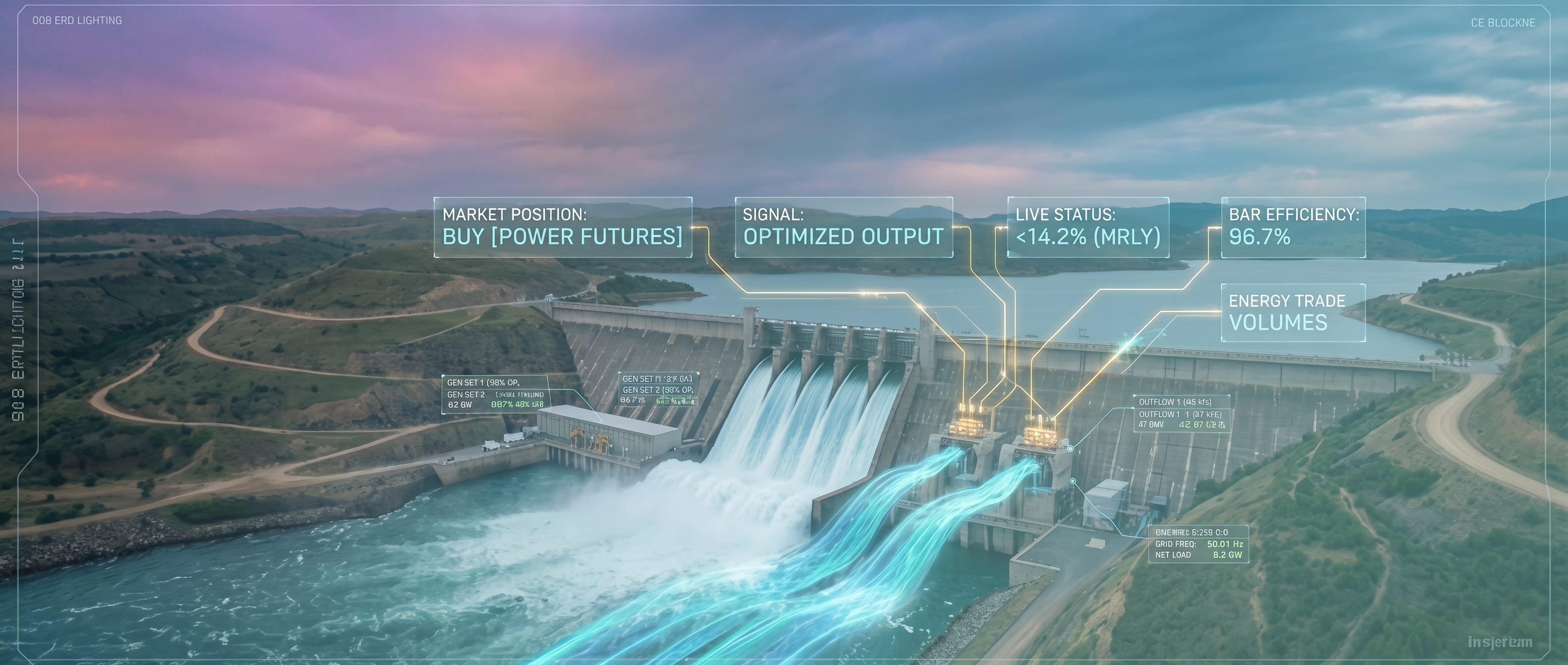
Volue Smart Power unifies multi-asset optimization, production planning, and automated trading workflows - so power producers can turn market volatility into a competitive advantage.
Energy Production Planning Software