Women of Volue: introducing Katrin Hippler
Today, as part of our ongoing Women of Volue series, we meet Katrin Hippler, our Product Marketing Team Lead.
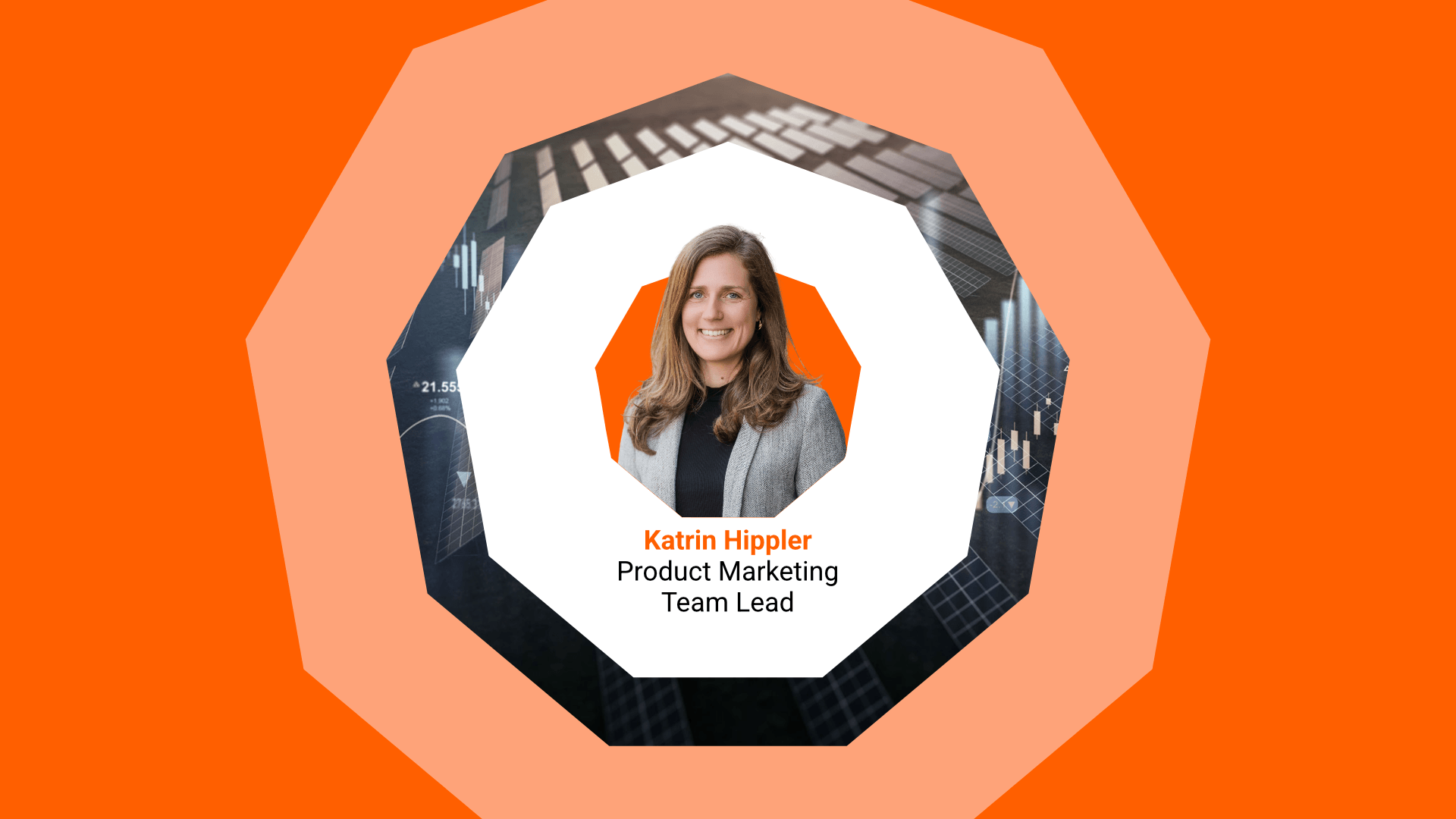
Today, as part of our ongoing Women of Volue series, we meet Katrin Hippler, our Product Marketing Team Lead.
Katrin's path into energy took her through studies in several countries and twelve years in tech. Along the way she has built a clear conviction about what product marketing is for: taking complex products and making their value obvious to the people who need them. Here she shares how she got here, how the role is changing, and why she believes the energy sector is one of the most interesting places to do the work she does.
My journey here wasn't conventional, but I've come to see that as an advantage. After school, I studied in Germany and Canada, then spent half a year in Sweden, alongside undertaking several internships. My studies were deliberately broad – Applied Cultural Sciences with a focus on business administration and geography – and I kept adding to them: interdisciplinary courses on climate change and energy, remote studies at the University of Bergen on the energy transition, and a PRINCE2 certification.
For twelve years I worked for an American tech company here in Norway. When that chapter came to a natural close, it gave me the chance to step back and think hard about what I wanted next. When I came across a product marketing role at Volue, it pulled together the threads I'd been following for years, and I applied. I'm very glad I did.
Product marketing is the bridge between product development and the market. Product management owns what gets built; we own how it's positioned, how it's launched, and how it reaches the right audience.
At Volue that translation matters more than most places, because our products are genuinely complex. Our job is to put them into the language our customers actually use, to make clear what value they create, and to give our cross-functional partners one shared story so that everyone tells it the same way.
Over the years I have seen that product marketing has changed a lot. It's moved from being a reactive launch function to one that builds systems. Everything around us has become faster, so our processes have had to adapt with it. We need to be aligned on priorities, tie everything we do back to business impact, and be willing to push back, because not every release deserves a launch. In practice that means shifting from producing every asset by hand to designing systems that produce them reliably, which frees up time for strategy and judgment. A growing part of the job is deciding which work AI handles well and which is better done by a person.
I lead a team of product marketers based in Norway and Spain, with widely different backgrounds and countries of origin. That mix is one of our real strengths: different perspectives, different market knowledge, and varied cultural and industry experience that takes our discussions in unexpected and productive directions.
My instinct is to lead inclusively and on the basis of trust. When time allows, I prefer to gather the team's input: the collective expertise almost always gets us to a better answer than I'd reach alone.
That approach only works if we move fast and cooperate seamlessly, so we're deliberate about how we operate. Every meeting has a clear agenda and ends with concrete action items, each with an owner and a timeline. Everyone knows their mandate and which decisions sit with them.
We use AI in three main ways. We build internal tools so our cross-functional partners can help themselves: one agent lets colleagues find the right sales enablement material without waiting on us. We use it for synthesis and research, digesting large volumes of material quickly. And we use it for standardized output where only the content changes, like a one-pager or a pitch deck, keeping structure and terminology consistent across business units.
All of it depends on good source material. AI reshapes what we already have, so a weak source gives a weak output. That is why we maintain one approved source of truth per product, owned jointly by product management and product marketing. AI can recommend, but product marketing decides: we set the bar for what good looks like and we are accountable for it.
AI has changed how our customers buy as well. Buyers use it to map the market and compare players, which means our messaging has to stay current everywhere we control it.
Energy is an exciting domain to work in. The products are complex and the customers know their field extremely well. The industry is fast-moving, driven by the energy transition, volatile markets and new regulation. Because we're selling to experts, everything we produce has to be accurate and well informed.
When it comes to product marketing specifically, a few things matter. Curiosity comes first, about the products, the customers, the challenges they face, and what the competition is doing. Next is the ability to hold several perspectives at once, thinking like a marketer, a salesperson, a product expert and a customer. From there it's a talent for simplification: making something complicated clear enough that a customer grasps the value quickly. And underpinning all of it, the ability to build trust with cross-functional partners.
And to any student weighing up the energy sector: the pace and the technical depth are part of what makes it rewarding, and you don't need a perfectly linear background to belong here. My own path wandered through several countries and disciplines, and every part of it turned out to be useful. The energy transition needs people who are curious, who can hold complexity without being overwhelmed by it, and who want their work to matter. If that sounds like you, this is a field worth taking seriously.
Some of the best decisions I've been part of came from teams where a real range of backgrounds and perspectives were in the room. As the energy sector transforms, it needs that breadth of thinking to keep evolving. We need fresh ideas and people who approach problems from different angles. Women bring enormous talent and energy to this industry, and the more visible and supported they are, the stronger the whole sector becomes. Building teams where everyone feels trusted to contribute, ask questions and challenge each other isn't just good for the people in them; it's how we can continue to do better work to drive the energy transition forward.
Explore our career opportunities: https://www.volue.com/careers